
A tooth that throbs for a day or two is uncomfortable, but not every toothache means you need to drop everything.
If you have facial swelling, a fever, or trouble breathing or swallowing along with tooth pain, go to an emergency room right away, since this combination can signal a dental infection spreading beyond your mouth.
If your pain is sharp but localized, with no swelling beyond the gum or jaw, seeking emergency dental care promptly can help determine the cause and the appropriate treatment.
Tooth infection symptoms can start with localized pain or sensitivity and become more serious if the infection spreads.
Bacteria can enter through decay, cracks, or other damage and reach the inner part of the tooth, where an infection may develop.
Knowing which symptoms point to a dental office and which point to a hospital can save you time, money, and real risk to your health.
At West Madison Dental, the team sees this exact question from worried patients almost every week: should you wait for an appointment, or go somewhere faster?
The honest answer depends on your specific symptoms, which is why this guide walks through the warning signs in plain terms.
Key Takeaways
- Breathing trouble, facial swelling that spreads fast, or a high fever alongside tooth pain call for emergency medical care, not a wait-and-see approach.
- Localized pain, swelling, or pus from a tooth usually needs a same-day dental visit rather than an ER trip.
- Feeling less pain does not mean an infection has cleared. Only dental treatment can remove the source of the infection.
Which Symptoms Mean You Should Go to the ER Now?
Certain tooth infection symptoms mean the infection has moved past your mouth and is putting your whole body at risk.
These are the moments to stop waiting and get emergency help, whether that’s calling 911 or heading straight to an emergency room.

Difficulty Swallowing, Breathing, or Speaking
This is the clearest sign of a true dental emergency. Swelling from a tooth infection can push into the floor of your mouth or throat and start to close off your airway.
You should call 911 or go to the nearest emergency department if swelling affects breathing or swallowing, spreads quickly into the face or neck, or comes with drooling or swelling under the tongue.
If talking feels harder than usual, or your voice sounds muffled, treat that as urgent. Don’t wait to see if it passes.
Rapidly Spreading Facial or Neck Swelling
Swelling that changes shape or size within hours, rather than staying in one spot, suggests the infection is moving through soft tissue.
Swelling that reaches your eye, your neck, or both sides of your jaw needs immediate attention.
The NHS guidance on dental abscesses notes that a swollen or painful eye, sudden vision problems, or a lot of swelling in the mouth are reasons to go to an emergency department rather than wait for a dental appointment.
Fever, Severe Illness, or Trouble Opening the Mouth
A fever paired with tooth pain tells you your immune system is fighting something bigger than a local infection.
Feeling flushed, sweaty, dizzy, or unusually tired alongside a toothache can point to infection spreading beyond the tooth, especially when your heart rate or breathing rate feels faster than normal.
Trouble fully opening your mouth is another red flag.
Swelling that restricts jaw movement can mean the infection has reached deeper tissue spaces, which in rare and serious cases can progress toward sepsis, a body-wide response to infection that needs hospital-level care.
Which Signs Need a Same-Day Dentist Visit?
Most tooth infection symptoms call for a same-day dental appointment rather than a hospital visit.
Severe tooth pain, gum swelling, pus, or a lingering bad taste all point to an infection that’s still contained to your mouth and needs a dentist’s tools to treat properly.
Severe Tooth Pain or Pain When Biting
Pain that keeps you up at night or spikes when you bite down usually means the nerve inside the tooth is inflamed or infected.
Severe toothache is a core example of a dental emergency, right alongside cracked teeth and abscesses.
Pain that doesn’t ease with over-the-counter medicine is a signal worth acting on the same day. Waiting usually makes the eventual treatment more involved, not less.
Gum Swelling, Pus, or a Bad Taste
A pimple-like bump on the gum, visible pus, or a persistent bad taste or smell in your mouth are classic signs of a dental abscess.
The NHS describes these alongside redness, sensitivity to hot or cold, and swollen glands on either side of the neck as common abscess symptoms.
Swollen lymph nodes in your neck mean your body is responding to the infection locally. That’s still a reason to see a dentist quickly, even without breathing trouble or a high fever.
Why Pain Relief Does Not Mean the Infection Is Gone
Pain easing does not mean the infection has cleared. Sometimes an abscess ruptures on its own, which can relieve pressure and reduce pain while the bacteria causing the infection are still present.
The underlying pocket of infection needs dental treatment to be fully removed, regardless of how you feel afterward.
Should You Call a Dentist, Urgent Care, or the ER?
Call your dentist first for most tooth pain and swelling, and reserve the ER for symptoms that affect breathing, swallowing, or your overall health.
Dentists treat the root cause of an infection, while emergency rooms are built to stabilize you and manage symptoms that put your whole body at risk.
What an Emergency Dentist Can Treat
An emergency dentist can drain an abscess, perform a root canal, pull a tooth, or manage a cracked tooth that’s letting bacteria in.
Dentists are equipped to perform procedures such as root canals, extractions, restorations, and abscess drainage, which are services hospital emergency rooms typically don’t provide.
When Medical Emergency Care Is the Safer Choice
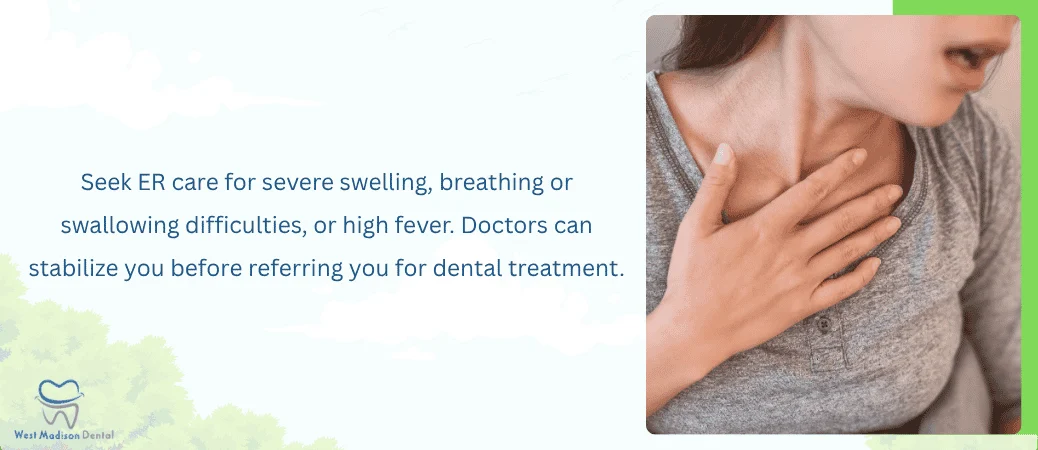
Medical emergency care is the safer choice when swelling threatens your airway, eyes, or neck, or when you have a high fever along with facial swelling.
Facial swelling affecting the eyes, neck, or airway, difficulty breathing or swallowing, and high fever with oral swelling are reasons to go straight to the hospital.
ER doctors can give IV antibiotics, control bleeding, and order imaging, but they generally refer you back to a dentist for the actual repair work once you’re stable.
Finding Help After Hours or on a Weekend
Many dental offices keep an after-hours emergency line for patients dealing with sudden pain or swelling.
If your regular office is closed and symptoms feel urgent but not life-threatening, a 24-hour dentist or urgent dental care clinic can often see you faster than a crowded ER waiting room.
Keep your dentist’s emergency contact number saved in your phone so you’re not searching for it while in pain.
How Is an Infected Tooth Treated?
Treating an infected tooth means draining the infection and addressing the tooth itself, not just managing pain.
A dentist examines the area, takes images to see how far the infection has spread, and then decides between saving the tooth or removing it.
Examination, Imaging, and Abscess Drainage
Your dentist will tap on the tooth to check for sensitivity and may recommend an X-ray or CT scan.
An X-ray helps identify an abscess and check whether infection has spread to nearby areas, while a CT scan shows how far it extends into the neck.
Draining the abscess, called incision and drainage, relieves pressure and removes built-up pus right away.
A periapical abscess forms at the tip of a tooth’s root, while a periodontal abscess forms in the gum tissue beside the tooth.
Both need drainage, but the follow-up treatment can differ slightly depending on where the infection sits.
Root Canal Treatment or Tooth Extraction
Root canal therapy removes infected pulp from inside the tooth before the tooth is cleaned, filled, and sealed.
Depending on how much tooth structure remains, a dental crown may be recommended afterward to restore and protect the tooth. When a tooth cannot be saved, extraction may be necessary.
A properly restored tooth can last a lifetime with good care, which is one reason dentists try to save a tooth when possible.
When Antibiotics Help, and Why They Are Not a Cure
Antibiotics control the spread of bacteria, but they don’t remove the pocket of infection sitting inside or around your tooth.
Whether antibiotics are needed depends on the extent of the infection, your symptoms, and your overall health.
Your dentist or medical provider can determine whether antibiotics are appropriate in addition to treatment that addresses the source of the infection.
Either way, the abscess itself still needs drainage and often a root canal or extraction to fully resolve.
Safe Pain Relief While You Arrange Care
While you wait for your appointment, over-the-counter pain relief like ibuprofen or acetaminophen can help.
The NHS advises rinsing with warm salt water, sticking to soft foods, and avoiding very hot or cold drinks. Never place aspirin directly against your gum or tooth, since it can burn the tissue.
How Can You Reduce the Risk of Another Infection?
Treating cavities and gum disease early is the most reliable way to avoid another tooth infection. Most infections start from decay or gum problems that had time to progress before anyone noticed.
Treat Cavities and Gum Disease Early

A small cavity is far easier and cheaper to fix than an infected tooth.
Cracks, chips, and untreated decay all give bacteria a path into the tooth’s inner layers, and once bacteria settle in, the chances of needing a root canal or extraction go up quickly.
Catching gum disease in its early stages, when gums are just a bit swollen or prone to bleeding, keeps it from progressing into deeper infection.
Keep Up Daily Care and Dental Checkups
Brushing with fluoride toothpaste twice a day, flossing once a day, and cutting back on sugary foods all lower your risk.
The NHS recommends regular dental checkups so problems get spotted before they turn into abscesses, along with replacing your toothbrush every two to three months.
Routine visits matter even when nothing seems wrong, since early decay rarely causes pain.
Get the Right Care Before Symptoms Worsen
A dental infection rarely stays small if it’s ignored. What starts as mild sensitivity or a dull ache can turn into swelling, fever, or pain that keeps you up at night within a matter of days.
Acting on early tooth infection symptoms protects both your tooth and your overall health.
If you’re noticing pain, swelling, or a bad taste that won’t go away, the team at West Madison Dental can help you figure out the right next step, whether that’s a same-day appointment or guidance on when emergency medical care is the safer call.
Frequently Asked Questions
When does a tooth infection become an emergency?
A tooth infection becomes an emergency when you notice swelling that spreads quickly, trouble breathing or swallowing, or a high fever along with facial swelling.
These signs suggest the infection may be moving beyond your tooth and into your body, which calls for immediate medical attention rather than a routine dental appointment.
Can the ER tell if I have a tooth infection?
Emergency room doctors can assess swelling, order imaging, and check for signs the infection has spread, but they generally can’t treat the tooth itself.
They can stabilize you with antibiotics or pain medication and then refer you to a dentist for the root canal, extraction, or drainage that actually resolves the infection.
Can urgent care treat a tooth abscess?
Urgent care clinics can sometimes prescribe antibiotics or pain relief for a tooth abscess, but they typically don’t perform dental procedures like drainage or root canals.
A dentist, including an emergency or 24-hour dental practice, is usually the right place for treatment that addresses the infection at its source.
What should I do if a tooth infection gets worse over the weekend?
Call your dentist’s emergency line first, since many practices offer after-hours guidance or weekend appointments for worsening symptoms.
If you develop facial swelling, fever, or any trouble breathing or swallowing, go to an emergency room right away instead of waiting until Monday.
Can a tooth infection be serious even if the pain stops?
Yes, reduced pain doesn’t always mean the infection is gone. Sometimes an abscess ruptures and drains on its own, which can ease pressure and pain temporarily while the infection is still present, so dental treatment is still needed to fully clear it.